This manual provides essential guidance for Isuzu D-Max operation‚ maintenance‚ and safety‚ mirroring the complex technical support offered by Alliance Factors for SWIFT systems.
Importance of the Owners Manual
Your Isuzu D-Max owners manual is a critical resource‚ much like the comprehensive technical support Alliance Factors provides for SWIFT infrastructure. It details everything from routine maintenance – oil changes and filter replacements – to understanding complex systems like the airbag deployment and Tire Pressure Monitoring System (TPMS). Ignoring the manual can lead to improper vehicle operation‚ potentially voiding your warranty‚ similar to failing to adhere to SWIFT’s Customer Security Controls Framework (CSCF).
This manual ensures safe operation‚ maximizing your D-Max’s lifespan and performance. It’s your guide to interpreting dashboard indicators‚ performing jump starts‚ and troubleshooting basic electrical issues. Just as Alliance Factors offers updates for BIC directories and syntax tables‚ the manual keeps you informed about your vehicle’s specific features and requirements. Familiarize yourself with its contents for a confident and secure driving experience.
Manual Scope and Coverage
This Isuzu D-Max owners manual comprehensively covers all aspects of vehicle ownership‚ mirroring the broad scope of services offered by Alliance Factors‚ including SWIFT interface software and user management tools. It details vehicle identification – specifically the Vehicle Identification Number (VIN) location and decoding – alongside precise engine and transmission specifications. The manual extends to crucial safety information‚ outlining airbag system operation‚ seatbelt usage‚ and safety warning labels.
Furthermore‚ it provides detailed instructions for operating your D-Max‚ from starting and stopping the engine to understanding driving modes and gear shifting. Coverage also includes a detailed maintenance schedule‚ fluid level checks‚ and troubleshooting common issues. Like Alliance Factors’ support for achieving Standard Operating Practice levels within the SWIFT network‚ this manual aims to empower you with complete vehicle knowledge.
II. Vehicle Identification & Key Information
Locate your D-Max’s VIN‚ crucial for identification‚ and understand its engine/transmission specs – similar to decoding SWIFT BIC codes with Alliance Factors’ tools.
Vehicle Identification Number (VIN) Location & Decoding
The Vehicle Identification Number (VIN) is a unique 17-character code acting as your Isuzu D-Max’s fingerprint. You’ll find it in several locations: on the driver’s side dashboard‚ visible through the windshield; on the vehicle’s registration documents; and potentially on the driver’s side door jamb.
Decoding the VIN reveals critical information about your vehicle‚ including the manufacturer (Isuzu)‚ year of manufacture‚ assembly plant‚ engine type‚ and model. Several online VIN decoder tools are available to assist with this process. Understanding your VIN is vital for warranty claims‚ insurance purposes‚ and tracking vehicle history.
Just as Alliance Factors decodes SWIFT BIC codes for financial institutions‚ understanding your D-Max’s VIN unlocks a wealth of information about its origins and specifications. Maintaining a record of your VIN is highly recommended for quick access when needed‚ mirroring the importance of secure SWIFT messaging.
Engine and Transmission Specifications
Your Isuzu D-Max is offered with a range of engine options‚ typically including diesel variants; Common specifications include a 1.9-liter turbocharged diesel engine producing around 164 horsepower and 360 Nm of torque‚ or a more powerful 3.0-liter engine. Precise output varies by model year and region.
Transmission choices generally encompass a six-speed manual or a six-speed automatic transmission. Both options are designed for durability and efficiency‚ much like the reliable infrastructure Alliance Factors provides for SWIFT networks.
Understanding these specifications is crucial for selecting the correct fluids and performing maintenance. Refer to the detailed charts within this manual for specific engine and transmission details relevant to your D-Max model. Proper maintenance‚ akin to regular SWIFT software updates‚ ensures optimal performance and longevity.

III. Safety Precautions & Features
Prioritize safety with features like airbags and seatbelts‚ mirroring the secure financial transactions facilitated by Alliance Factors’ SWIFT compliance services.
Safety Warning Labels and Symbols
Your Isuzu D-Max is equipped with various warning labels and symbols designed to alert you to potential hazards. These are strategically placed throughout the vehicle – on doors‚ under the hood‚ and within the cabin – to ensure clear communication regarding safe operation. Pay close attention to symbols indicating airbag locations and deployment warnings‚ as well as those related to fluid handling and hot surfaces.
Understanding these symbols is crucial for preventing accidents and ensuring your safety‚ much like Alliance Factors’ SWIFT system updates maintain secure financial messaging. Familiarize yourself with labels concerning seatbelt usage‚ child restraint systems‚ and the proper use of vehicle controls. Ignoring these warnings could lead to serious injury or vehicle damage. Regularly inspect labels for clarity and replace any that are damaged or missing. Remember‚ proactive safety awareness is paramount‚ mirroring the diligent monitoring of transactions by en.SafeWatch Filtering.
Airbag System – Operation and Warnings
The Isuzu D-Max’s airbag system is a vital safety component designed to supplement seatbelt protection in certain collision scenarios. Airbags deploy rapidly and with significant force‚ so understanding their operation is critical. Never place objects or install accessories in front of airbags‚ or in areas where they could interfere with deployment – similar to ensuring clear communication lines within a SWIFT network‚ as Alliance Factors provides.
Always ensure passengers‚ especially children‚ are properly restrained. Airbags can pose a serious risk to unrestrained occupants. Be aware that airbags may not deploy in all accidents‚ such as rear-end collisions or minor impacts. Regularly inspect the airbag system warning light on the dashboard; a continuously illuminated light indicates a potential malfunction requiring immediate attention‚ much like a flagged transaction by en.SafeWatch Filtering demands investigation.
Seatbelt Usage and Maintenance
Proper seatbelt usage is the most effective safety measure in your Isuzu D-Max. Always ensure all occupants are securely fastened with the appropriate seatbelts before commencing travel. Seatbelts should fit snugly across the hips‚ not the abdomen‚ and the shoulder strap should lie flat against the chest. Regularly inspect seatbelts for any signs of damage‚ such as fraying‚ cuts‚ or loose stitching – akin to Alliance Factors’ meticulous updates to BIC directories.
Do not use damaged seatbelts. Replace them immediately. Avoid twisting or knotting seatbelts‚ as this can compromise their effectiveness. Clean seatbelts with mild soap and water only. The retractor mechanism should function smoothly; any resistance or difficulty retracting the belt requires professional inspection. Remember‚ seatbelts work in conjunction with the airbag system to provide optimal protection‚ mirroring the layered security approach of SWIFT and en.SafeWatch Filtering.
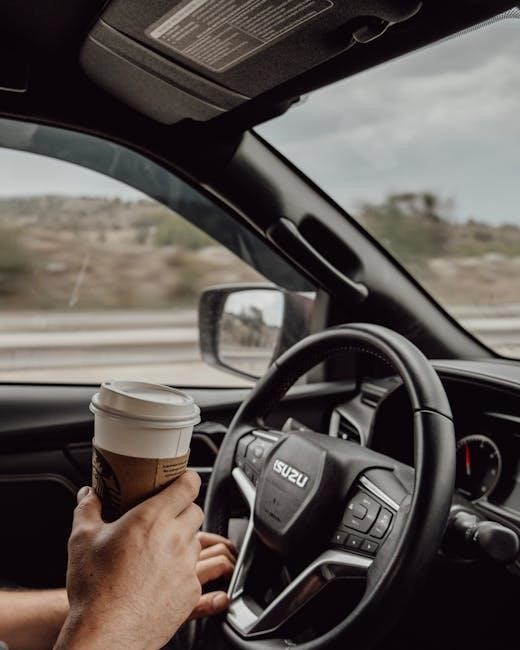
IV. Operating Your Isuzu D-Max
Familiarize yourself with all controls and indicators‚ ensuring safe operation‚ much like understanding SWIFT’s User Management application for secure transactions.
Starting and Stopping the Engine
Before starting‚ ensure the parking brake is engaged and the gear selector is in Park or Neutral. Insert the key into the ignition and turn it to the ‘ON’ position‚ allowing the vehicle’s systems to initialize – similar to a SWIFT system’s pre-operational checks. Listen for the fuel pump priming. Then‚ turn the key further to the ‘START’ position and hold until the engine cranks and runs. Release the key immediately upon engine start.
To stop the engine‚ shift the gear selector to Park or Neutral‚ firmly apply the parking brake‚ and turn the ignition key to the ‘OFF’ position. Remove the key to prevent accidental operation. Avoid prolonged idling‚ as it can impact fuel efficiency and potentially lead to engine wear. Remember‚ consistent maintenance‚ like SWIFT interface updates‚ is crucial for optimal performance. Always allow the engine to cool down before performing any maintenance procedures.
Understanding the Dashboard Instruments & Indicators
The Isuzu D-Max dashboard provides crucial information about the vehicle’s operation. The speedometer displays your speed‚ while the tachometer indicates engine RPM. Fuel and temperature gauges monitor vital engine parameters. Warning lights illuminate to alert you to potential issues – treat these with the same urgency as identifying discrepancies in a SWIFT transaction.
Pay close attention to the check engine light‚ oil pressure warning‚ and battery warning. The ABS and airbag indicator lights confirm system functionality. Familiarize yourself with each symbol’s meaning as detailed in this manual. Ignoring warning lights can lead to more significant problems‚ much like neglecting security controls in a financial network. Regularly monitoring these indicators ensures safe and efficient driving‚ mirroring the constant monitoring required for SWIFT compliance.
Gear Shifting and Driving Modes
The Isuzu D-Max offers various gear shifting options‚ including manual and automatic transmissions. Understanding these modes is crucial for optimal performance and fuel efficiency. For manual transmissions‚ smooth and precise gear changes are essential. Automatic transmissions offer convenience‚ but selecting the appropriate mode – Drive‚ Sport‚ or Low Range – enhances control in different conditions.
Low Range (4L) provides increased torque for off-road driving or steep inclines‚ similar to the specialized support Alliance Factors provides for SWIFT networks. Sport mode delivers quicker acceleration. Always consider the terrain and driving conditions when selecting a gear or mode. Incorrect gear selection can strain the engine or transmission. Proper technique ensures a comfortable and safe driving experience‚ much like maintaining a secure financial transaction flow.
V. Maintenance Schedule & Procedures
Regular maintenance‚ like Alliance Factors’ SWIFT updates‚ ensures optimal D-Max performance. Follow the schedule for oil changes‚ filter replacements‚ and fluid level checks diligently.

Routine Maintenance Intervals (Oil Changes‚ Filters)
Maintaining your Isuzu D-Max requires adherence to a strict maintenance schedule‚ much like the consistent updates needed for a secure SWIFT network‚ as provided by Alliance Factors. Oil changes are critical; typically‚ every 12‚000 kilometers or 6 months‚ whichever comes first‚ is recommended using the specified oil grade.
Air filter replacement should occur every 24‚000 kilometers‚ or annually‚ to ensure optimal engine performance. Fuel filters require attention every 48‚000 kilometers. Cabin air filters‚ vital for interior air quality‚ should be replaced every 30‚000 kilometers or two years. Regularly inspecting and replacing these filters‚ similar to updating BIC codes‚ prevents system inefficiencies.
Always consult the full maintenance schedule within the owner’s manual for specific intervals based on your driving conditions and vehicle usage. Proper maintenance extends the life of your D-Max and maintains its reliability‚ mirroring the long-term support Alliance Factors provides to financial institutions.
Fluid Level Checks and Top-Ups
Regularly checking and topping up fluid levels is crucial for Isuzu D-Max performance‚ akin to the meticulous monitoring Alliance Factors provides for SWIFT transaction security. Inspect the engine oil level weekly‚ ensuring it falls between the minimum and maximum marks on the dipstick. Coolant levels should be checked in the reservoir when the engine is cold‚ topped up with the correct coolant mixture as needed.
Brake fluid‚ power steering fluid‚ and windshield washer fluid levels also require periodic checks. Low brake fluid could indicate a leak‚ demanding immediate attention. Maintaining correct fluid levels prevents component damage and ensures safe operation‚ much like adhering to CSCF requirements.
Refer to the owner’s manual for specific fluid types and capacities. Consistent fluid level maintenance‚ similar to software interface updates‚ contributes to the longevity and reliability of your D-Max.
Tire Pressure Monitoring System (TPMS) & Tire Maintenance
The Isuzu D-Max’s Tire Pressure Monitoring System (TPMS) alerts you to low tire pressure‚ enhancing safety and fuel efficiency – a proactive approach mirroring Alliance Factors’ SWIFT security filtering. Regularly check tire pressure‚ even with TPMS‚ using a reliable gauge. Maintain the pressure specified on the tire placard (usually located on the driver’s side doorjamb).
Inspect tires for wear‚ damage‚ and uneven tread patterns. Rotate tires according to the recommended schedule in the owner’s manual to promote even wear. Proper tire maintenance extends tire life and optimizes handling‚ similar to the operational requirements of the SWIFT Shared Infrastructure Programme.
Remember to check the spare tire’s pressure as well. Ignoring tire maintenance can compromise safety and performance‚ just as neglecting SWIFT updates can create vulnerabilities.
VI. Troubleshooting Common Issues
This section details solutions for typical D-Max problems‚ akin to Alliance Factors’ SWIFT troubleshooting‚ offering guidance for jump-starts and warning light interpretations.
Jump Starting Procedures
Caution: Jump starting involves potential hazards. Ensure both vehicles are switched off and not touching. Connect the red (positive) cable to the positive terminal of the discharged battery‚ then to the positive terminal of the assisting battery. Next‚ connect the black (negative) cable to the negative terminal of the assisting battery.
Important: Connect the final black cable to a grounded metal part of the Isuzu D-Max engine block‚ away from the battery‚ to avoid sparks near the battery’s flammable gases. Start the assisting vehicle and let it run for a few minutes. Attempt to start the D-Max. If it doesn’t start immediately‚ wait a few more minutes and try again.
Disconnect the cables in the reverse order of connection. Like Alliance Factors’ SWIFT support‚ following precise procedures is crucial. If repeated attempts fail‚ consult a qualified mechanic. Ignoring these steps could damage the vehicle’s electrical system‚ mirroring potential issues within a complex network like SWIFT.
Basic Electrical System Troubleshooting
Initial Checks: Begin with the simplest checks – verify the battery connections are clean and tight. Inspect all fuses related to the affected system (lights‚ wipers‚ etc.) using the fuse box diagram in this manual. Replace any blown fuses with the correct amperage rating. Like Alliance Factors’ SWIFT interface updates‚ ensuring correct components is vital.
Further Investigation: If fuses are intact‚ check wiring for damage or corrosion. A visual inspection can reveal broken wires or loose connections. Use a multimeter to test for voltage at various points in the circuit‚ comparing readings to the wiring diagram.
Professional Assistance: Complex electrical issues require specialized knowledge. If you’re uncomfortable performing these tests‚ or if the problem persists‚ consult a qualified mechanic. Ignoring electrical faults can lead to further damage‚ similar to neglecting SWIFT security protocols.
Understanding Warning Lights and Their Meanings
Critical Warnings: Red warning lights indicate serious issues requiring immediate attention. The engine warning light (check engine) signals potential engine problems; stop safely and investigate. A low oil pressure light demands an immediate engine shutdown to prevent damage. These are akin to critical alerts within a SWIFT system‚ demanding swift action‚ as emphasized by Alliance Factors.
Important Reminders: Yellow or amber lights signify conditions needing attention soon. A low fuel light indicates the need to refuel. The ABS light suggests a problem with the anti-lock braking system.
Consult the Manual: Refer to the detailed warning light section in this manual for specific meanings and recommended actions. Ignoring warning lights can lead to costly repairs and compromise safety. Regular checks‚ like SWIFT compliance updates‚ are crucial.
VII. Warranty Information
This section details Isuzu D-Max warranty coverage‚ claim procedures‚ and limitations‚ ensuring owner rights are protected‚ similar to Alliance Factors’ SWIFT support.
Isuzu D-Max Warranty Coverage Details
The Isuzu D-Max warranty provides comprehensive coverage‚ safeguarding against defects in materials and workmanship for a specified period. Typically‚ a basic bumper-to-bumper warranty covers the vehicle for 3 years or 36‚000 miles‚ whichever comes first. The powertrain warranty‚ encompassing the engine‚ transmission‚ and drive axles‚ often extends to 5 years or 60‚000 miles.
Corrosion protection is also included‚ with coverage varying based on the component and severity of rust. Specific exclusions apply‚ such as wear-and-tear items like brake pads and tires‚ and damage resulting from misuse or accidents. Like Alliance Factors’ support for SWIFT systems‚ this warranty aims to provide peace of mind.
Detailed warranty booklets outline the complete terms and conditions‚ including claim procedures and authorized service centers. Maintaining proper vehicle maintenance‚ as outlined in the owner’s manual‚ is crucial for warranty validity. Always retain service records as proof of maintenance.
Warranty Claim Procedures
To initiate a warranty claim for your Isuzu D-Max‚ first‚ ensure the issue is covered under the warranty terms‚ referencing the detailed warranty booklet. Contact an authorized Isuzu dealership – they act as the primary point of contact for all warranty repairs‚ similar to Alliance Factors assisting with SWIFT interface updates.
Schedule a service appointment and clearly describe the problem to the service advisor. The dealership will diagnose the issue and‚ if covered‚ obtain authorization from Isuzu before proceeding with repairs. Retain all repair orders and documentation.
You may be responsible for a deductible‚ depending on the warranty coverage and the nature of the repair. Promptly submit any required claim forms and supporting documentation to the dealership. Like SWIFT’s User Management application‚ a streamlined process ensures efficient claim resolution.